

Charlie Schlenker
Senior ReporterCharlie Schlenker was a senior reporter at WGLT. He retired in September 2026.
Charlie grew up in Rock Island, Illinois, and graduated from Augustana College. He has spent more than four decades in radio and has won numerous state and national awards for journalism.
Charlie lives in Normal with his family.
-
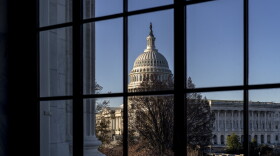 Congressional approval ratings are in the tank. By some measures this is one of the least productive sessions of Congress in living memory. WGLT's Charlie Schlenker reports those things may not change much any time soon.
 -
 The war in Iran — or conflict, depending on who you ask — is perhaps the top foreign policy issue facing voters this midterm election. WGLT's Charlie Schlenker reports on how the congressional candidates in the districts of Bloomington-Normal perceive the country's position against Iran.
 -
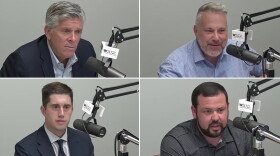 Inflation, the rising cost of living and affordability are huge issues this election season. WGLT's Charlie Schlenker reports on how Central Illinois congressional candidates are addressing those topics.
 -
The major party candidates for Congress in Central Illinois have significantly different views of how to deal with looming financial crises over the federal budget deficit, national debt, and Social Security.
-
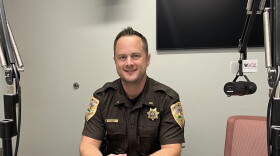 Correctional officers began wearing body worn cameras in the jail in mid-August. They were purchased as part of a 10-year technology upgrade for both jail and police operations within the McLean County Sheriff's Department.
 -
 A legal cease fire between the Town of Normal and City of Bloomington on one side and McLean County government on the other shows signs of deterioration. The two sides again appear headed for court.
 -
 A journalism professor who has roots in Pekin and Peoria says journalists must do more than cover the news; they must actively build community for local news outlets to survive in a challenging world.
 -
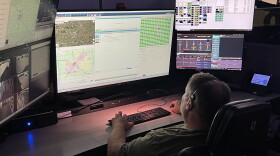 Delays and glitches in a new McLean County Computer Aided Dispatch system are frustrating public safety agencies. McLean County is implementing a new suite of software applications to speed up fire and police response in the county. It has not gone well.
 -
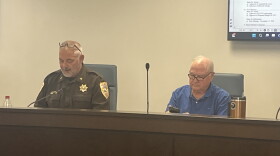 The Emergency Telephone System Board in McLean County wants to update its unified emergency responder radio system. It will be expensive.
 -
 McLean County government is getting into the heart of its budget season. The proposed $150 million spending plan would be up 4.1% from the current fiscal year — an increase of $5.9 million.


