




Face painting, bounce houses, free books and an ice cream truck aren’t the typical group of activities associated with mental health outreach.
That was exactly the goal of McLean County’s first-ever Mental Health Field Day.
McLean County Behavioral Health Coordination hosted a wide variety of tents and organizations Saturday at Normandy Village in Normal as part of Mental Health Awareness Month. The free event brought together various organizations offering mental health services, developmental resources, wellness activities and community support programs.
Families wandered among booths while children played games and volunteers handed out information about therapy, early intervention services, smoking cessation programs and support groups.
Organizers said they wanted the event to feel approachable — especially for people who may not already be connected to social services or mental health organizations.
“We wanted to, during Mental Health Awareness Month, target neighbors, friends and family, people who are not already within the social service community,” said Kelley Amigoni, director of behavioral health coordination for McLean County. “We’re hoping an event like Community Mental Health Field Day will get those folks out and get them connected to the resources that they need.”

Assistant director Samantha Herrell said the county’s Behavioral Health Forum typically focuses on professionals within the mental health field. This event shifted that focus toward the community.
“We have around 30 providers, community organizations here today sharing information about what they do, the resources that they have available,” Herrell said. “And we have special events like a bounce house and face painters and stuff just to get family and friends and neighbors out here and learning more, seeing what the community has available.”
The field day was tied to this year’s national Mental Health Awareness Month theme from Mental Health America — “More Good Days, Together.”
For Herrell, that means mental health care does not always have to look clinical or severe.
Sometimes, she said, it means intentionally slowing down and allowing space for joy or connection.
“Your mental health and taking care of your mental health comes in all different shapes and sizes and that involves a lot of different versions of self-care,” Herrell said. “When we’re physically sick, we immediately go to the doctor, or we take a rest day or we get medication from the store, or we call upon our friends and family to make soup or anything like that.
"Those are the same things you can do for your mental health. They might just look a little bit different.”
Herrell said the county wanted the event to normalize play and self-care for adults as much as for children.
“We encourage people to just have a day of play, to do something that’s not work-related, that’s not stressful, that’s carefree,” Herrell said. “Get your face painted, jump around, connect with people that you haven’t talked to before because you never know who you’re going to meet at events like this.”
That idea of “play” came up repeatedly throughout the event.
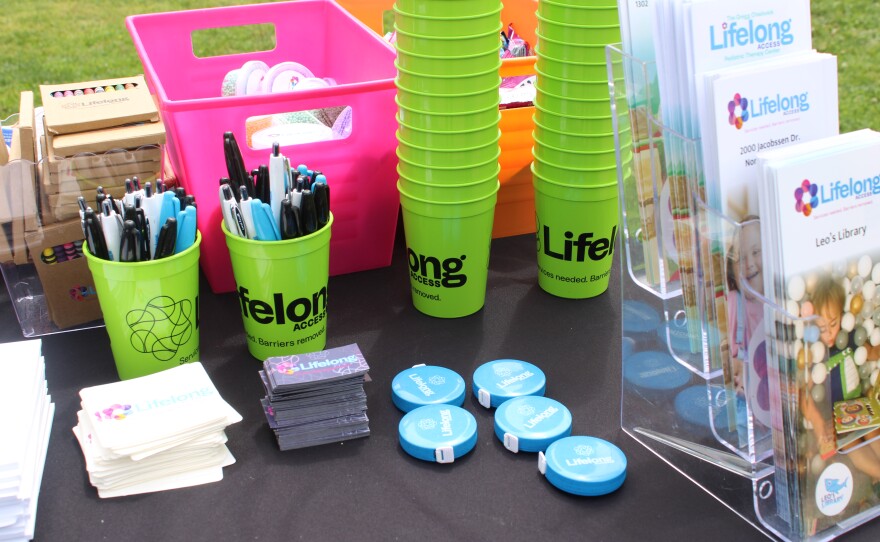
At the Lifelong Access booth, Director of Marketing and Sales James Rivera described some of the nonprofit's more unconventional therapy options, including walking therapy, video game counseling and Dungeons & Dragons-based group therapy.
“The first one is video game counseling through a Nintendo Switch, where a therapist will sit with a client, and they’ll play a game,” Rivera said. “It helps them to process things. And it also helps them in terms of their decision-making because they’re more on their turf. And so they feel more comfortable, and they share more.”
Traditional therapy models, he said, do not work for everyone — especially adults who may already feel disconnected from spaces centered around emotional regulation or creativity.
“The adults are the forgotten generation,” Rivera said. “We’re all about the kids. But at the same point, you have to think about it like this — who’s taking care of the kids? It’s the adults.”
He said adults often neglect their own mental health while trying to support everyone around them.
“If they’re not getting the attention and the help that they need, they’re not going to be any good to the children that they’re caring for,” Rivera said. “The children are modeling what their parents are doing.”
Economic stress
Other organizations focused on the connection between mental health and economic stress.
Mary Campbell, director of Dreams Are Possible, said many of the women her organization works with are juggling multiple minimum wage jobs while trying to care for children and maintain a household.

“There’s absolutely no time for self-care for them and they burn out,” Campbell said. “Anybody would if you had no opportunity to take care of yourself.”
Dreams Are Possible helps women pursue workforce training and transition into higher-paying careers, often through certification programs at Heartland Community College. Campbell said stable income and mental health are deeply interconnected.
“Poverty and mental health are often interconnected,” she said. “It’s very difficult if you’re poor to get help with your mental health.”
Campbell said having a sustainable job with benefits can fundamentally change a family’s ability to seek care.
“If you can get a job with insurance and benefits, then you have a better chance of addressing any mental health issue that you’re dealing with, as well as for your children,” she said.
A few tents down, Child and Family Connections promoted free developmental evaluations and early intervention services for children ages 0 to 3.
Sarah Shields said many parents hesitate to seek help because they assume developmental delays will resolve on their own.

“There’s this idea that you should just wait and see,” Shields said. “Wait and see what happens when they turn 2, see what happens when they turn 2 1/2.”
Instead, Shields encouraged families to seek evaluations early if they notice developmental concerns.
The Bloomington Public Library also was at the event, bringing free books, reading logs and games through its Bookmobile program.
Bookmobile driver Brittany Adams said reading itself can become an important form of emotional support.
“Even reading fiction books will greatly help your mental health,” Adams said. “We also have lots of events and programs ... that might stimulate your interest and get you engaged in the community. And that is also a form of mental health support.”
At another table, McLean County Health Department health promotions representative Brian Paton discussed the relationship between nicotine use and mental health, especially among younger people who vape.
“A lot of people don’t think about that,” Paton said. “That is tied to the kind of epidemic we’re seeing with teen use of vapes.”
Paton said the department hoped the event will increase awareness about programs available through the county, including smoking cessation resources and behavioral health information.
Pink Heels, a nonprofit originally founded to support women with cancer, attended the event with its signature pink emergency vehicles.

“We support any and all illnesses — men, women, children,” said Keith Lippert, president of the organization’s local chapter. “What we do is we make visits to their house to show them love and support, to give them that uplift during their time.”
Lippert, a former paramedic, said years in emergency medicine took a serious toll on his own mental health.
“I went through it really bad,” he said. “It had to have people who forced me into going to get the help I needed because I’ve seen so many things.”
He said stigma still prevents many people — particularly first responders — from asking for help.
“You don’t know what you see. People don’t understand what we see at that point,” Lippert said.
A few younger voices stressed the importance of self-care and mental health, especially when online. While helping run an ice cream truck at the event, volunteer Estela Sevilla said social media can make it difficult for teenagers to maintain confidence.
“Don’t always compare yourself to the people on social media,” Sevilla said. “Everyone’s life is different and everyone has their own stuff going on.”

The goal of the event was never to solve mental health struggles in a single day. Instead, the county hoped to create an environment where people could discover resources, meet providers and realize they are not isolated in what they are experiencing.
“One of the biggest non-secrets about mental health is that everyone has mental health,” Herrell said. “You might not have an immediate mental health concern, but everyone experiences mental health just like they do physical health.”
“And no one ever has to feel alone in what they’re going through because we’re all going through something.”
The McLean County Health Department estimated more than 100 people attended.
Mental health resources in McLean County
- Call or text 988 for 24/7 mental health crisis support.
- McLean County Mobile Crisis Response: 309-827-5351
- Behavioral Health Urgent Care, 520 N. Center St., Bloomington
- Mental Health America offers free mental health screenings, worksheets and wellness tools.
- McLean County Behavioral Health Coordination
- Bloomington Public Library
- Lifelong Access
- Dreams Are Possible
- Child and Family Connections #16
- Mental Health First Aid Training through McLean County Health Department
- QPR Suicide Prevention Training provides online Question, Persuade, Refer suicide prevention training sessions.

