

A state prison in Lincoln is setting a new standard for juvenile corrections. Monarch Youth Center uses a trauma-informed approach that incarcerated youths say is changing their lives for the better.
Young people sentenced to prison are incarcerated in the Illinois Department of Juvenile Justice [IDJJ], which, along with the juvenile court system, is designed to be more rehabilitative than punitive.
For many of the youth who live there, though, Monarch is different. “Micah” said one of the biggest distinctions between Monarch Youth Center and other juvenile prisons is how much time he spends outside.
“Other facilities, like, really, you mad — you really ain't got no choice but to go in your room, to be honest. That's the main coping option,” he said. “It's like, this is a better coping option here.”
Micah is not his real name. [WGLT agreed to not publish the names or any images of the youth at Monarch.] He’s been there about six months after time in other juvenile prisons.
“Here, it’s a lot of communication, a lot of programs that are going on that’s to better ourselves for when we get back to the outside,” he said.
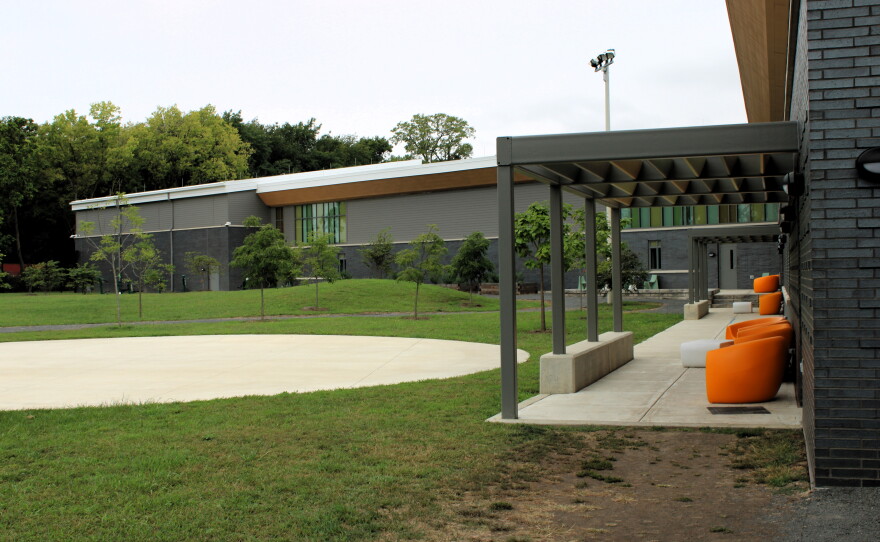
Opened late last year, the Monarch Youth Center sits on the edge of the former Lincoln Developmental Center site. So there is a sense of both the old and the new, but the facility itself still has a bit of that “new car smell.”

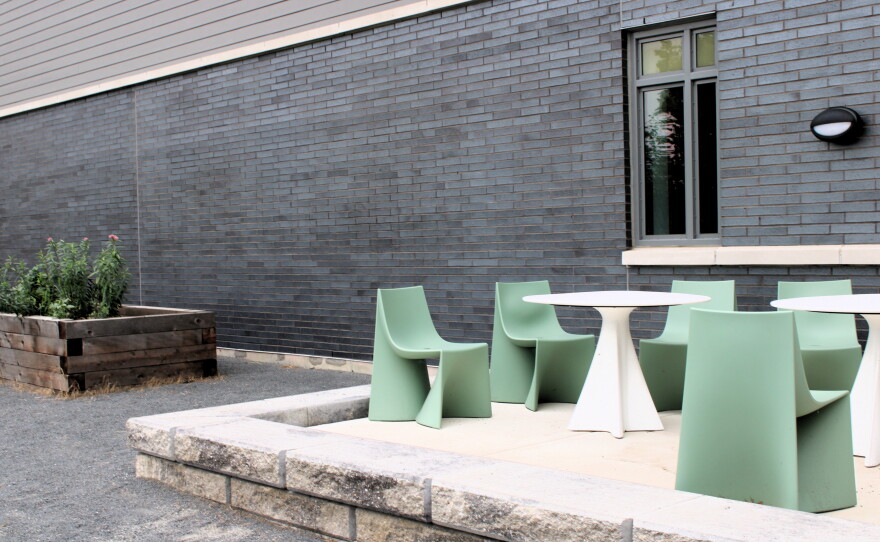
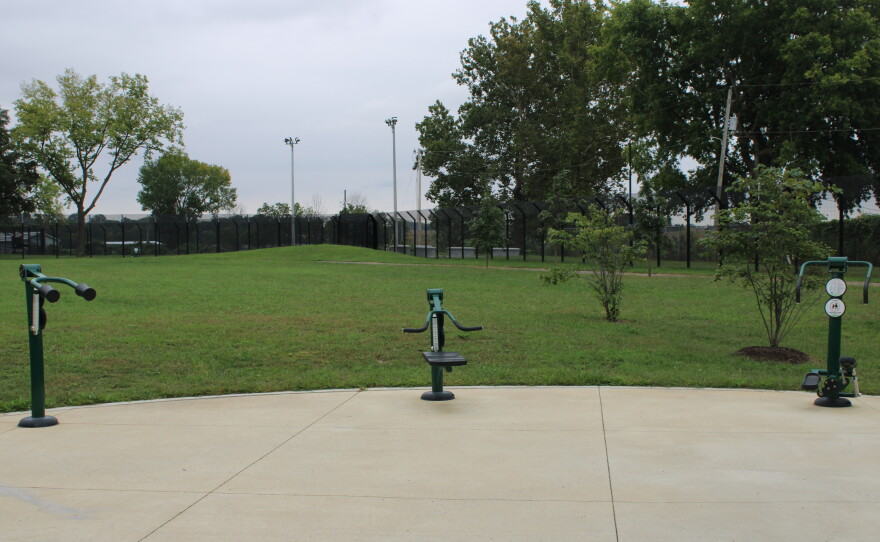
Relative to other prisons, Monarch is airy — inviting, even. Once inside, there’s a large green space separating the juvenile prison’s primary building and its two dorms, which house up to 30 teenage boys. There is outdoor space for eating and family visits on nice days, plus a walking path, exercise machines and a basketball court.
“I won a few games on that court. Easy,” said "Brian" [also not his real name]. “A lot more than a few.”
Less successful was Brian’s performance in the “Monarch Mile,” a foot race that takes seven loops on the walking path.
“I lost to a 50-year-old man,” he said, referring to one of the guards. “I let him win. I let him win.”
Near the lounge area is a bunch of raised garden beds which youths can tend to. In those beds, there’s milkweed growing. That matters. Milkweed attracts monarch butterflies.
Micah is on the team who looks after the garden.
“I come out here, I pull the weeds out; I water them,” he said.
He also works on the mowing team, looking after the lawn.
“I’ll mow, trim around the trees and pick up other stuff around here. I can’t just sit around. I gotta be active,” he said.
Filling a gap
Monarch was created to fill a gap serving incarcerated young men from Central Illinois. Most of the state’s youth prisons are in the northern part of the state [Chicago, St. Charles and Warrenville, the state’s only youth prison that accommodates girls]. Another is in Grafton, near St. Louis. Southern Illinois is served by a center in Harrisburg, which will soon also accommodate young adults in the Illinois Department of Corrections in need of a high school education.
Assistant Superintendent Audrey Cheatham said where youths are from is the primary decider in who gets a bed at Monarch Youth Center. For incarcerated youths, proximity to family, she said, is an important consideration.
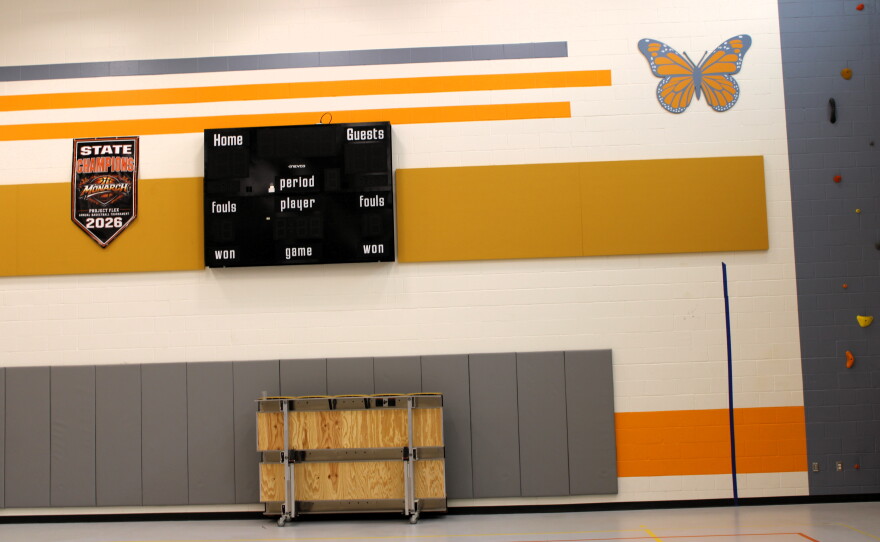
But by building a facility from scratch, the Illinois Department of Juvenile Justice got to imagine a different kind of facility. It’s still prison — with concrete walls, locked doors and lots of security. But the physical footprint is softer. There are colorful accent walls, comfortable, funky furniture, ample green space and a lounge space in each dorm with television and video games.
Brian and Micah say Monarch’s green space is a big deal in separating this experience from others. Some facilities have green space, but access is limited. Illinois Youth Center Chicago, located on the city’s near west side, has no outdoor space at all.
“Any other facility you can’t go outside and sit outside and actually be out there with people and experience the breeze and smell the fresh air. So, it’s a change. Big difference," Brian said.
The carpet was also new for Brian. He came to Monarch in December. It was the first time he’d felt softness under his feet in 3.5 years.
“The facility’s amazing,” he said. “It’s very beautiful, bright, and it brings a lot of joy into ourselves. It releases an inner self inside of us who we didn’t really experience at every other experience at every other facility because you’ve got to look over your shoulder. Here, it’s a different type of challenge; it’s a challenge that helps you change for the better.”

Metaphors are big at Monarch. Leisure Time Activities Supervisor Josh Merreighn said he often refers to how caterpillars are captured in a chrysalis before becoming a butterfly.
“Inside that, they change,” he said. “On the inside, what they do in there will directly affect the outcome when that cocoon or chrysalis opens up.”
It’s a reminder for youth not just about where they are, but where they’re going.
“You're in jail, right? This is jail. This is prison. This is tough. This is hard,” Merreighn said. “Ain't nobody sitting there in the morning thinking ,‘I want to be here.’ Nobody is. But where do you want to be?”
Young people can remain in the juvenile prison system in Illinois until age 22. Staff say they do their best to keep people in the juvenile justice system as long as possible. Those with long sentences may eventually be transferred to the adult prison system, the Illinois Department of Corrections [DOC].
That’s where Merreighn spent the bulk of his 27-year career in corrections.
“I came from DOC, worked with pretty much every demographic you can imagine, male, female, co-ed,” he said. “Then I decided to come to the juvenile division to try to help some of the youth not end up in the place I just came from.”
For those eventually going to an adult prison, Merreighn said part of his job is “to help them understand what they’re going to be going into and how to best survive that world.
“Whether you’re on either side of the fence, you need two things: hope and purpose. If we can provide hope and purpose to the individuals we’re serving, then we can actually accomplish the goal to give them something to strive for.”
Brian and Micah are two-thirds of Monarch’s first class of high school graduates. On Oct. 1, the alternative school picked a new name, Nelson Mandela Academy. The name was chosen by students, who worked with teachers to research individuals who embody leadership, determination and perseverance.
Principal Traci Knisley said Mandela, who spent nearly three decades in prison before becoming the president of South Africa, reflects students being pushed “to see the power of their own voices” and “to understand that real, lasting, meaningful impact comes through collaboration, reflection and leadership, not force or violence.”


As more youth graduate from high school, the facility is looking to build out professional and trades programs, starting with culinary arts. Music production is also in the works.
Until then, Merreighn said they make do with donations and volunteers using the future culinary classroom to make pizzas and, more recently, barbecue.
“We made ribs by ourselves,” Brian said. “Smoked them. Ours were the best. We all used the same rub and everything, but like I had a little lime juice on mine.”
Lime juice was the deal breaker.
Another exciting accomplishment: Monarch attended the first statewide juvenile corrections basketball tournament — and won.
When WGLT toured Monarch in September, another tournament, for flag football, was set to take place at the PEACE [Phoenix Emerging Adults Career and Education] Center in St. Charles. The team had custom jerseys and equipment donated to the facility.
“We do basketball, we do flag football, we do open gym and everything else,” he said. “That’s nothing but a pathway for us to be able to build rapport with them. Once they buy into me, they’ll buy into some of the stuff I’m saying.”
Trauma-informed approach
These privileges aren’t guaranteed, nor are other, simpler ones like getting to pick their own clothes or get a haircut. Like Merreighn said, it’s still prison.
But corrections facilities are increasingly recognizing that sometimes people find themselves in prison through a combination of poor choices and poor circumstances. For juveniles, those circumstances matter even more, leading to a trauma-informed approach that considers what youths went through before they arrived at the prison gates.
Departing McLean County Circuit Judge Casey Costigan, who oversaw the juvenile delinquency docket, said many teens in his courtroom come from horrible situations.
“Situations to where the general public would not understand what these kids have been through, through the first 15 years of their lives,” he said.
According to the Trauma-Informed Care Implementation Resource Center, the approach shifts the focus from “What’s wrong with you?” to “What happened to you?”

That includes recognizing that teens involved in the criminal justice system are often recovering from trauma and might not have the adequate resources and tools to make positive decisions.
McLean County Assistant Public Defender Art Feldman said gaining those tools is not easy.
“Because if they come into us, they’ve had 15 years of trauma under their belt. It’s hard to flip the switch sometimes," he said.
As with the adult system, Feldman said the juvenile system has seen a big jump in youth offenders with mental health issues.
He should know, he’s been with the public defender’s office, “like, since the Cenozoic era.”
It’s actually since 1991. And since 1997 he has been assigned a mix of juvenile delinquency and abuse/neglect cases.
“It’s not surprising to occasionally see some crossover,” Feldman said of the two areas. “Families that have had history in abuse and neglect court, then sometimes the kids end up in delinquency court. It’s not necessarily a shock.”
An ‘ideal place’
McLean County Director of Court Services Suzanne Montoya said Monarch Youth Center is “the ideal place” for incarcerated youths. And its approach is one Court Services has sought bring to the county’s juvenile detention center, where certain youths are held for pretrial detention.
Montoya, Feldman and others from the county’s probation department toured the facility last month when WGLT visited.

The county recently hired a mental health professional dedicated to its juvenile detention center, a 26-bed facility which houses youths held in pretrial detention. The JDC also recently completed a mural project adding two art pieces within the facility and has made other efforts to make the 30-year-old facility a more inspiring space.
“It’s not a stretch to say they’re not really thrilled to be here,” said Feldman. “But anything we can do to make the transition to get them ready to get back out into society any better certainly couldn’t hurt.”
Preparing for what’s next
Patricia Strader is a mental health professional at Monarch Youth Center. She helps the youth work through issues with trauma-informed care and cognitive behavioral therapy. Monarch Youth Center also has substance use treatment and family therapy.
Strader is also Bella’s mom. Bella is a therapy dog who visits twice a week.

“She definitely is an asset here,” said Strader. “A lot of these youths haven’t seen dogs in a long time. They’ve been incarcerated for several years.”
It took a little while for Bella to fit in.
“She’s a little bougie dog,” Strader said. “At first, they were a little offput by her. She’s not a pitbull. She’s not a big, manly dog.”
The day WGLT toured Monarch, Bella was sporting a little cow print dress.
“But they take good care of her. She will sit up and watch TV with them on the couches. Or while they play their game systems, she will literally just provide that love and support. It also provides a relaxing environment for the units sometimes.”
Cheatham said a more nurturing approach doesn’t necessarily shield young people from a hard landing when reentering a tough home environment, a city or neighborhood where they got into trouble or an even harder situation in the adult prison system. It’s about giving them tools to deal with all of that.
“The tools that we’re giving them should be able to translate whether they go home, or wherever they go in the community, or IDOC,” she said. “Giving them the trauma-informed care piece is just a part of the big picture of having the tools to be successful no matter where they go.”


