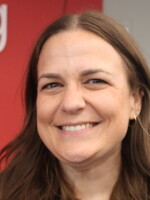
Kate Strubhar grew up in Bloomington-Normal watching her dad go to work at State Farm every day. Now, she works on State Farm's Innovation team as a ventures executive, helping connect startup companies with the Bloomington-based insurer.
"Day to day, I have the good fortune of working with the teams that are focused on looking externally, really, at the startup environment, at emerging technology and capabilities — powerful trends and insights that might impact the insurance industry, and most specifically, State Farm," Strubhar said.

Strubhar said State Farm recently held a startup pitch competition at a conference called InsureTech Connect — the largest "insuretech" [insurance + technology] conference in the world. At the competition, Strubhar said startup companies pitch their ideas "to a broad audience of insurance and technology professionals," and the audience holds a live vote to select the winner.
Within the ecosystem of startup companies State Farm engages with, Strubhar said the company is "rooted first in customer need and customer problem" and "interested in helping solve the real problems that we know customers face and that State Farm faces." As an example, she pointed to the recently announced sponsorship of Emberpoint, a new intelligence company trying to minimize wildfire damage.
In her work, Strubhar said she sits right at the intersection between her century-old company and the brand new startups just coming on the scene.
"Startups move really quickly and are often focused on a specific problem," Strubhar said, while "a large and sophisticated enterprise has a lot of experience and perspective and scalability opportunities" that a startup may not have. She said both ways of approaching business are valuable, and companies on both ends of the spectrum can have meaningful relationships.
At this year's startup pitch competition, Strubhar said State Farm noticed a massive influx of "AI-first" companies. Compared to State Farm, which was founded 104 years ago, Strubhar said an AI-first or AI-native company is one "born in this era of AI." In other words, these companies aren't trying to adjust to AI and incorporate it into existing workflows — they are using AI to launch a company that may otherwise not have existed.
Two big trends
Strubhar said State Farm is watching two big trends in the startup environment right now: enterprise knowledge management and software-defined vehicles. Both impact State Farm's risk profile, but in different ways.
Enterprise knowledge management is a concept that applies across multiple industries, Strubhar explained. It's "a fancy way of saying we want to ensure that we're able to continue to carry forward expertise and learning and insight" into the future. Strubhar said in the many years of State Farm's history, there are thousands of employees who have intimate understanding of its systems, processes, and other legacies. The company wants to document and preserve that knowledge for the future, as employees retire, Strubhar said. And it is increasingly looking at digital tools to do so.
Software-defined vehicles, Strubhar explained, could be driver-led or autonomous, but are defined by the advanced technology they have access to. For example, companies like local electric vehicle manufacturer Rivian can push new capabilities to vehicles through remote software updates. Strubhar said State Farm is trying to anticipate what will and what won't change about driving in the future.
"We know that people will still need to get from A to B, or from one location to another," she said. "But how they do that now and into the future might evolve. And we want to continue to be there for customers, regardless of how they're moving and whether or not they're behind the wheel."
Strubhar said severe weather, rising costs, changing driving patterns, and other emerging risks create new challenges for the industry. The place to start, in her opinion, is "by understanding business and customer needs, and then exploring solutions that could help prevent losses, or make insurance easier for customers, or better prepare for emerging risks."
As for today's children in Bloomington-Normal who may dream of having an innovative job like Strubhar's in the future, her advice is to "keep going, and dream big, and most of all, keep learning."
"I think being really curious and learning will serve you well," Strubhar said.